The gown comes off at the end of the night, goes into the back of somebody’s car, and gets hung in a closet at a rental house on the Grand Strand. Three weeks later it is still there. Wedding dress preservation is the least romantic subject in this entire industry and one of the few where waiting actually costs you something, because the damage a coastal wedding does to a gown is invisible on the night and permanent six months later.
If you married on a beach at Pawleys Island, under oaks near Georgetown, or anywhere along this coast, your gown picked up things a ballroom gown never does. This is what wedding dress preservation looks like after a coastal wedding, and what to do about it.
What actually damages a gown, and none of it looks like damage
Sugar is the biggest culprit and the one nobody expects. Champagne, wine, and sweet tea leave almost no visible mark when they dry, and then they oxidize over months into brown stains that appear out of nowhere. That perfectly clean looking hem can be spotted by your first anniversary.
Salt is the coastal specialty. Salt air alone deposits on fabric, and any contact with sea spray or wet sand brings it into the fibers. Salt is hygroscopic, meaning it pulls moisture out of the air, so a gown carrying salt stays slightly damp in a Carolina summer even sitting in a closet. That is how mildew starts.
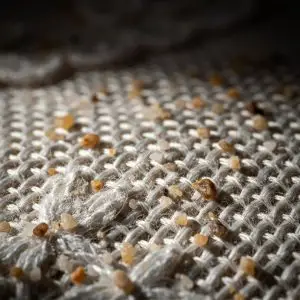
Sand works mechanically. Fine grains lodge in seams, in the layers of a tulle skirt, and inside a bustle, and they abrade fibers every time the gown shifts. Shaking it out does not get it all.
Body oils and deodorant are the quiet ones. They do not show at first and they yellow over time, particularly under the arms and along the bodice edge.
None of this is a reason to panic. All of it is a reason not to wait.
The timeline that matters
Two to four weeks. That is the honest window for getting a gown to a cleaner and starting wedding dress preservation after a wedding, and sooner is genuinely better.
The reason is chemistry rather than urgency for its own sake. Sugar based stains become progressively harder to remove as they oxidize, and a stain caught at two weeks comes out far more reliably than the same stain at six months. Salt and moisture together start working immediately.
This runs straight into honeymoon season, which is exactly the problem. The most common version of this story is a gown that sat through a two week trip and another three weeks of unpacking. If that is your plan, hand the gown to a family member before you leave with clear instructions, or arrange the drop off before the wedding. Someone who is not you should be responsible for it.
If your gown has already been sitting for months, take it in anyway. Less comes out than would have, but a professional cleaner will still remove a great deal, and stopping the process matters more than the stains you have already lost.
Cleaning and preservation are two different services
Worth separating, because the packages sold to brides blur them.
Cleaning is the actual work. A gown is assessed, stains are spot treated by hand, and the piece is cleaned by a method suited to its fabric and embellishment. This is where the money should go, and it is the part that determines whether your gown is still white in twenty years.
Wedding dress preservation, strictly speaking, is the packaging and storage afterward. Acid free tissue, an archival box, careful folding with padding at the creases.
The boxes marketed with the phrase heirloom sealed deserve a specific caution. A sealed box you are told never to open is a box you cannot inspect, and conservators generally advise against fully sealed storage because trapped moisture has nowhere to go. Ask any provider directly whether the box can be opened without voiding anything. If the answer is evasive, that tells you what you need to know.
How the professionals store textiles
The standards are not a secret and they are not proprietary. The National Archives publishes guidance on preserving textiles as part of its family archives series, and the principles it describes are the same ones any competent wedding dress preservation service follows.
Store in the dark, because light fades and weakens fibers over time. Keep temperature and humidity stable, which rules out attics, garages, and most Lowcountry basements and crawlspaces entirely. Use acid free materials, because ordinary cardboard and tissue release acids that yellow fabric. Avoid plastic bags, which trap moisture and off gas. Minimize folds and pad the ones you cannot avoid, since a sharp crease held for years weakens the fibers along the line.
One more wedding dress preservation step that brides rarely hear: open the box every few years and refold along different lines. Textiles benefit from the change, and it gives you a chance to catch a problem while it is still fixable.
Where to store it in a coastal house
This is the part where Lowcountry brides need different advice from everyone else.
Our humidity is not a minor factor. A gown stored in a garage or an unconditioned attic near the water is in a slow moisture cycle that no archival box fully solves. The right place is an interior closet in the conditioned part of the house, up off the floor, away from any exterior wall.
Flood risk deserves a thought too along this coast. Storing an irreplaceable textile at floor level on a ground floor is a decision worth reconsidering, and it takes ten seconds to put the box on a shelf instead.
Choosing a cleaner
Choosing who handles your wedding dress preservation comes down to specific questions rather than a brochure.
Ask whether they clean wedding gowns regularly or occasionally, because bridal work is a specialty and general dry cleaning experience is not the same thing. Ask how they handle beading and lace, since embellishment often has to be protected or removed and reattached. Ask what their process is for a gown with salt and sand exposure specifically, which is a real differentiator on this coast. Ask what the packaging is, whether the box is acid free, and whether it can be opened.
Then ask what happens if something goes wrong. A confident provider has an answer.
Your stylist has heard from a lot of brides about where their gowns went after the wedding, so ask at your appointment or call us afterward. It is a normal question and we would rather you ask than guess.
If you are not keeping it
Wedding dress preservation is not obligatory. Selling a gown, donating it, or having it altered into something wearable are all legitimate choices, and a gown that will be sold should still be cleaned promptly, because condition drives what it is worth.
If you wore the gown at a beach ceremony, the case for cleaning is the same either way. Salt does not care about your plans for the dress.
Our guide to beach wedding dresses for the Grand Strand covers which fabrics handle sand and salt best in the first place, which is worth reading before you buy if a shoreline ceremony is the plan.
Start before the wedding
The single most useful thing about wedding dress preservation is this: decide who is handling the gown before the wedding day, and write it down.
The bride is not that person. You will be exhausted, leaving for a honeymoon, or both. Give the job to your mother, your sister, or anyone reliable who is not traveling, along with the name of the cleaner and a deadline.
If you are still shopping and thinking about what a coastal wedding asks of a gown, come talk it through. Our appointments are private, which means the whole boutique is yours. Book a private VIP appointment at Pawleys Island and bring your venue and your date.
Frequently asked questions about wedding dress preservation
How soon should I get my wedding dress cleaned?
Within two to four weeks, and sooner is better. Sugar based stains from champagne and wine oxidize over time and become far harder to remove, and salt combined with humidity starts working immediately after a coastal wedding.
What is the difference between cleaning and preservation?
Cleaning is the actual stain treatment and washing of the gown. Preservation is the archival packaging and storage afterward, using acid free tissue and an archival box. Cleaning is the part that determines the gown’s long term condition.
Are sealed preservation boxes a good idea?
Be cautious. A box you are told never to open cannot be inspected, and conservators generally advise against fully sealed storage because trapped moisture has nowhere to go. Ask whether the box can be opened without voiding any guarantee.
Does salt water really damage a wedding dress?
Yes, and in a way you cannot see. Salt draws moisture out of the air, so a gown carrying salt stays slightly damp in a humid climate even in a closet, which is how mildew begins. Any sea spray or wet sand contact means the gown needs prompt cleaning.
Can old stains still be removed?
Some can, many cannot fully. Oxidized sugar stains are the hardest. Take the gown in regardless, because a professional will still remove a great deal and stopping further damage matters more than the stains already set.
Where should I store my wedding dress?
In an interior closet in the conditioned part of your home, up off the floor and away from exterior walls. Avoid attics, garages, and any unconditioned space, which is especially important in a coastal Carolina climate.
Should I hang my wedding dress or box it?
Boxing flat with acid free tissue is better for long term storage, because hanging puts continuous stress on the shoulders and seams. If a gown is light and simple, a chemical free cotton garment bag in a stable closet can work.
Why should I avoid plastic garment bags?
Plastic traps moisture against the fabric and can off gas over time, which contributes to yellowing. Dry cleaner bags in particular are meant for transport, not storage.
How often should I check on a preserved gown?
Every few years. Open the box, inspect it, and refold along different lines so creases do not become permanent. This also gives you a chance to catch a problem while it is still fixable.
Do I have to preserve my wedding dress?
No. Selling, donating, or altering the gown into something wearable are all legitimate choices. Even then, clean it promptly, because condition determines what it is worth and what can be done with it.
Planning a coastal wedding
The best preservation decision happens before the wedding, when you choose a gown suited to sand, salt, and a Lowcountry evening.
Book a private appointment at our Pawleys Island boutique, between Charleston and Myrtle Beach, and browse our wedding dresses first. Or call 843.979.0103 with questions about your venue.
The Dressing Room
Recent Posts